The other day I began reading a book titled On Beauty & Being Just by Elaine Scarry. It is a small thing, 140 pages or so; a written version of a lecture Scarry gave in the late 90s. The purpose towards which Scarry worked was the redemption of beauty. To bring beauty back to the forefront as something more than a characteristic, but as an elemental inspiration force all its own. To break free from utilitarian chains that scorn beauty as an inhibitor and instead to place beauty back on its pedestal as one of the keys to our humanity.
There was an exercise early in the book that struck me. Scarry asks her audience (first in-person, now via text) to think of a time they made a mental error. Unsurprisingly, most struggle to think of a specific example. We’re used to ignoring or re-contextualizing times when we were wrong in pursuit of psychological self-preservation. Having come up against blank stares, Starry then adjusts the question and asks everyone to think of a time they made a mistake in judging something’s beauty. Ah, then the lightbulbs start going off.
Her example was her long-held indifference towards palm trees. For much of her life they were but simplistic plants whose beauty, if it could be called that, was indebted to their environment; they were like mirrors of the beautiful tropics rather than beautiful things in and of themselves. Then she ran across a series of paintings by Henri Matisse of Nice, France, and it clicked for her like a chair over the back of the head. Suddenly, she could see the way a palm’s fronds play in the light, how they bend, curve, and cast out energy on their own or in groups. A palm tree, then, is in perfect harmony with its surroundings and worthy of appreciation for it.
My recent journeys with photography match Scarry’s realization. I had regarded photography as something almost vulgar in nature. On the outside it felt like something either obsessed with the grand sweeping gesture or the cripplingly inane. Canyons and selfies, to be blindingly reductive. It felt nothing like an art and more like an expensive pastime. Then, and I can’t quite recall what the trigger was — probably architectural and city photography, if I was to guess — it all snapped into place.
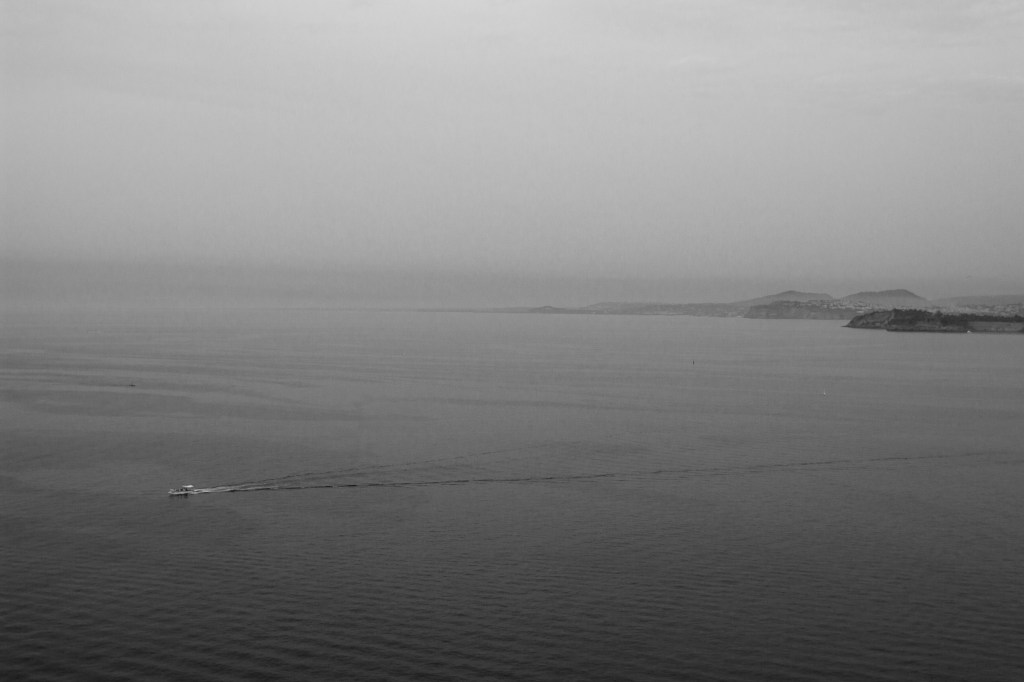
There is in every picture the split-second attempt at capturing the atmosphere of a moment. As time ticks by, every moment lived is immediately consigned to oblivion. Not even a photo can turn back the clock. But photos, when done well or even when done haphazardly, give us a chance to keep moments near. We can go back, gaze upon moments we lived, and feel the touch of the past stirring in our hearts and minds. Sometimes we smile at the connection, sometimes we cry because the memory has now morphed into something painful, and sometimes we swoon because the picture is so beautiful we feel as though we are physically there in the presence of something that moves us. It is less about representing a “true nature” of the object in the picture and more about our ceaseless search for ways to circumvent the laws of the universe. The cosmos says we can never go back to what was. We say if we can’t go back, we’re going to bring a piece of what was with us. It is, in this way, such a fundamentally human thing for us to do, and beautiful for it.
I’m only a third of the way through On Beauty, but I already feel that it has a certain resonance at this point in my life that I doubt it’d have had even a couple years ago. To find something beautiful is, we think, something only people are capable of. That has to ultimately mean something, right?
 New Orpheu