Edvard Munch – Behind The Scream by Sue Prideaux
Modernity gave us the gift of sight. To see through the facade of the surface and into the titanic depths which governs human life and the universe we inhabit. It provided the tools of inquiry—the brain, the heart, the senses, the spirit—and it is up to us to pursue the answers. But give billions the freedom to question and you’re bound to get billions of answers. Trying to pick out a critical mass of consensus may prove our greatest test. It may be our grave. Still, we must try.
Perhaps the example of the past can be our guide. How did people, no less capable than ourselves, try to grasp a way forward through the disturbances of their time? Well, collectively, they often failed. Hundreds of millions dead at a disturbingly routine go. To find a model worth admiring we’re forced to whittle down to the individual. Not to emulate, but to understand and thereby take on some aspect of their life which we’d do well to note. Even in all the darkness we create, there is light worth finding.
Edvard Munch would probably be surprised to find himself declared one of those lights. His story is a series of trials. The early death of his mother, the strict Lutheranism of his father, the death of his sister, brushes with his own death by illness, poverty, alcoholism, emotional insecurity, rejection by his countrymen, and much more besides. Yet through all this he would achieve artistic mastery—The Scream is one of humanity’s signature works. It only scratches the surface of his output.
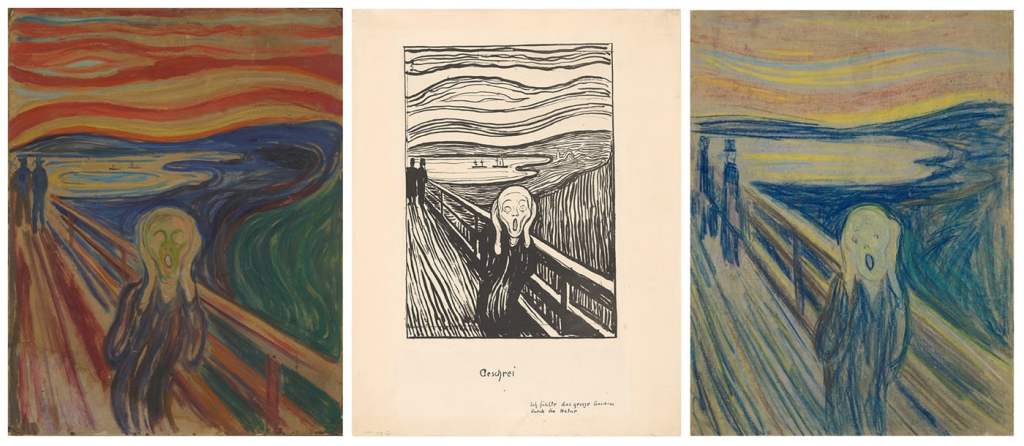
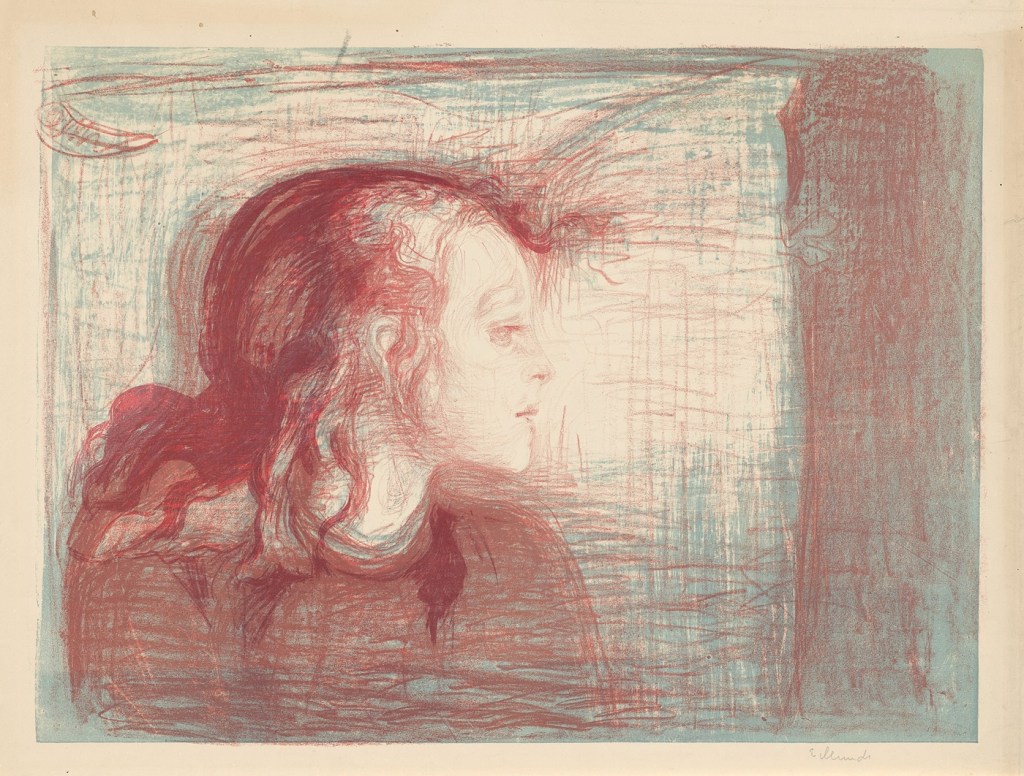
Crucially, this is not a story of sheer personal perseverance. Munch’s example is not solely of implacable commitment to his cause overcoming all obstacles (although his drive was formidable); it is as much a testament to a mind and spirit amenable to changing times. His first breakthrough came in part through the influence of nihilism. Rejecting classical forms which dominated painting, Munch was encouraged to take the leap into a mode of creation known as ‘soul painting’. To use his ability not to reflect the world as it is, but rather the world inside himself. Enter emotions, nature, turbulent romance, Adam and Eve, death, birth, science, psychology, memory, the place of the worker in society, and much more. In form and content, Munch’s work was revolutionary—it rejected minute detail in favor of sensation, color as motif rather than adornment, and conveyed powerful emotion with limited brushstrokes. It was also derided by a society unwilling to follow the path he cut through the tangle of roots beneath our world. The Sick Child, his first major exhibited work, was a critical failure. A laughingstock at best, the accepted sign of derangement at worst. This was the typical response to Munch until he finally rounded a corner in avant garde-friendly Berlin at the turn of the century.
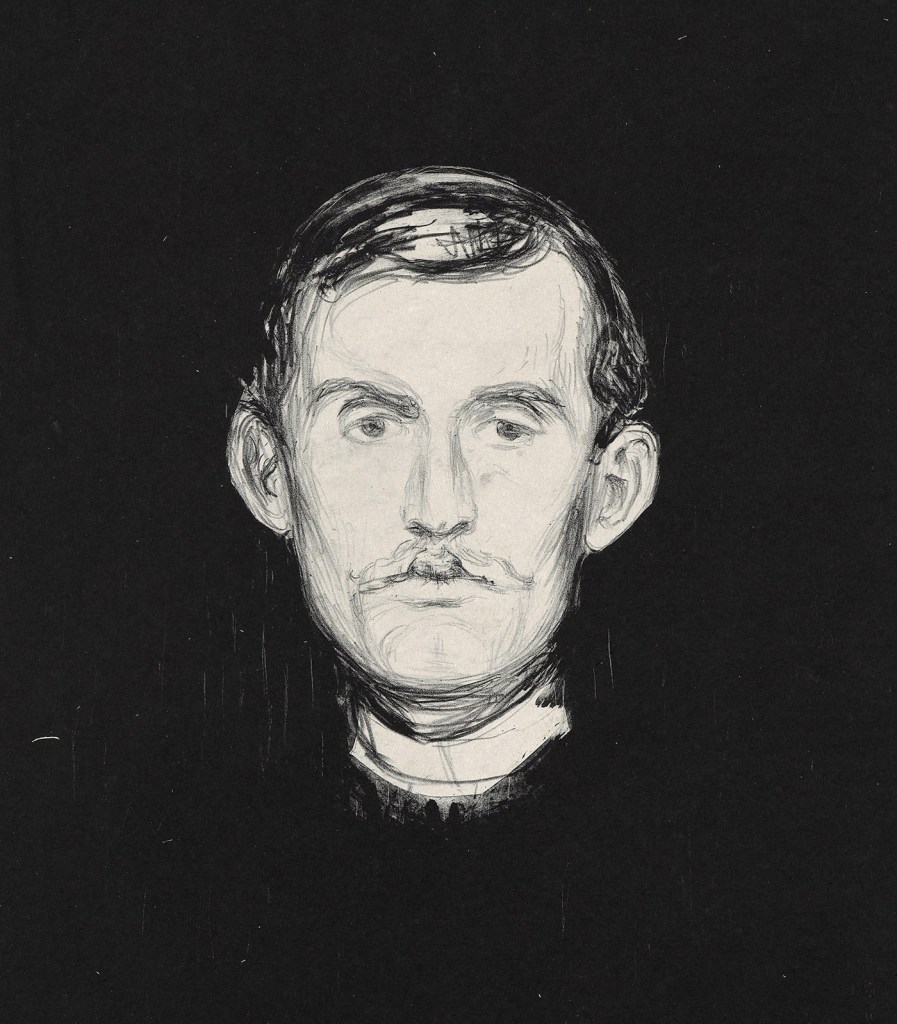
During his period of “failure” through to his eventual success, though, he never deviated from the way he wanted to paint. Grinding poverty, extreme dependence on alcohol, and painful relations with women brought him to the edge of the abyss, but he (or a handful of friends and patrons) always found a way to pull him through. Every day gained meant another day exploring the waves modernity threw at the creaking edifice of Wilhelmine Europe. Nietzsche, Einstein, and Freud rent the world into dramatically new forms. Munch took note. With God dead, the atom ascendant, and the psyche in flux, Munch seamlessly fit into the puzzle. His portfolio, once deemed amateurish and an affront to sensibility, suddenly seemed to anticipate and then lead these new movements. Yet he did not allow the praise to blunt his path: he never courted a movement, had exceedingly few disciples or adherents, and spent much of his life seeking solitude to continue his individual development. Attuned to politics, he rejected “isms” in favor of the independent mind while acknowledging the enormity of the dawn of the laborer. He was content to have his “children” (his paintings) gathered about him while he worked on his craft until the end. Acclaim allowed him to pursue this goal, but one has the sense that he’d have found a way to keep developing and creating no matter how straitened his circumstances.
It is that spirit which is most admirable in Munch. To have the courage to take a very hard look at the world and honestly reflect his impressions for others to see. While we may lack his artistic ability to paint the world in a new light, we do contain the same capacity towards honesty, industry, and curiosity. Dark though the times may be, we too can find a way through.
 New Orpheu